WY Cattle Prices Impacted by Beef Proclamation
Author
Published
10/26/2026
WY Cattle Prices Impacted by Beef Proclamation
By Bernt Nelson, AFBF Economist
Key Takeaways:
- The beef import proclamation, along side the re-opening of the Southern U.S. border to imports of cattle from Mexico, reduced Wyoming cattle prices[JN1] , costing producers an average of more than $260 per head in September.
- Wyoming ranchers fared better than the national average, but still experienced losses equal to roughly 9% of cattle value.
- Lower cattle prices and increased imports did not translate into meaningful grocery store savings.
In late August, President Trump issued a proclamation to temporarily expand the tariff-rate quota (TRQ) for lean beef trimmings by 300,000 metric tons for a period of three months. Beef began entering the U.S. under the lower tariff rate on Sept. 1, 2026. The proclamation “encourages” grocery stores to sell the beef at a 25% discount, without any retailer commitments or enforcement mechanism. As of Sept. 29, about 37,486 metric tons of beef had been imported under new quota.
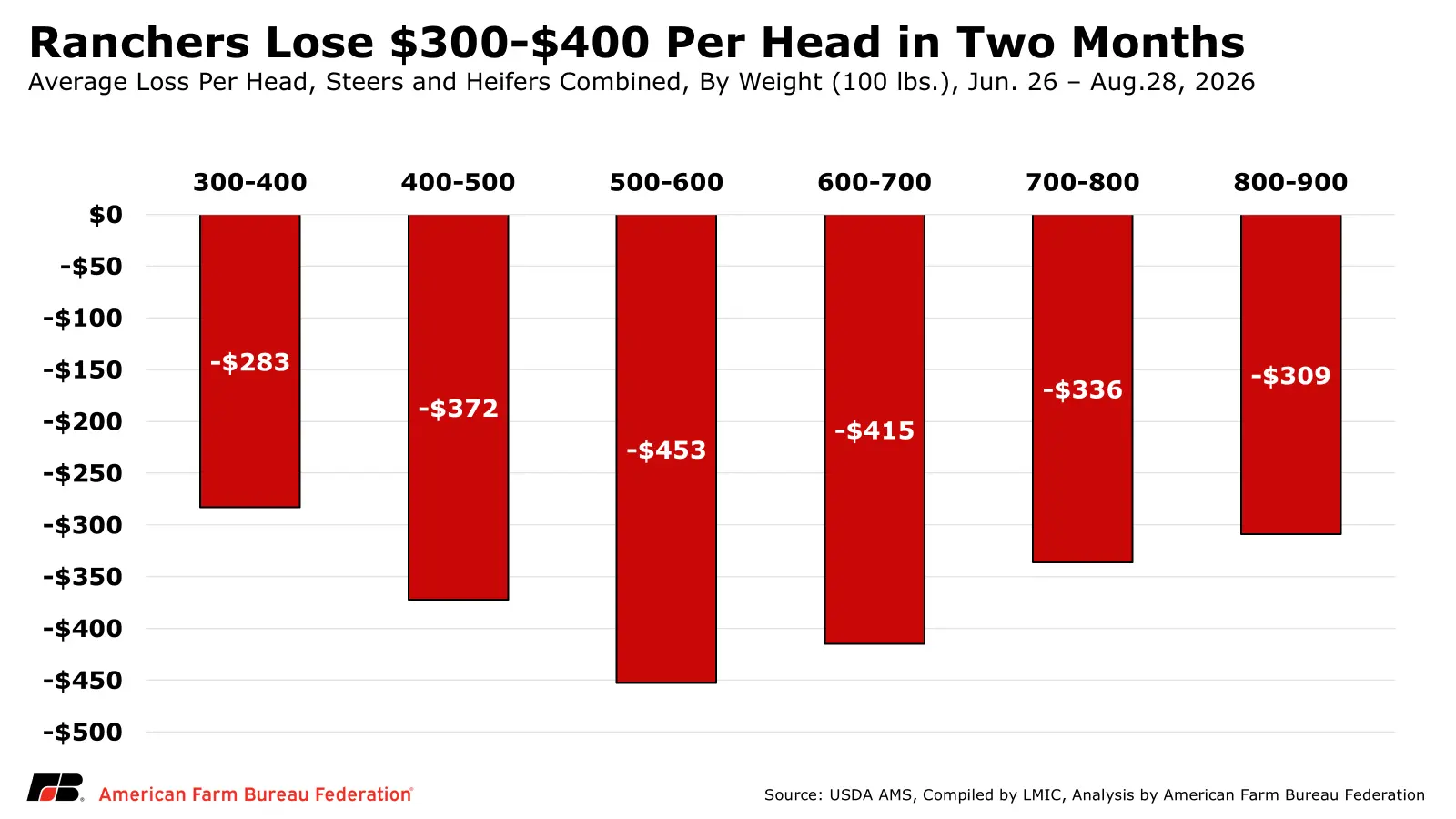
Nationally, feeder cattle ranging from 300-900 pounds lost about 15% in value, or the equivalent of $300-400 per head, across the country from June through September. Prices for fed cattle also fell during that period with the five-area weekly direct slaughter price for all steers and heifers falling about $576 per head or about 14.5%.
There are other factors contributing to lower cattle prices. After being closed for about 15 months due to the outbreak of New World screwworm, imports of cattle have begun at two ports—Douglas Arizona and Santa Teresa New Mexico. Columbus, NM is scheduled to reopen on October 26, 2026. As of Oct. 10, about 34,000 head of heavy cattle have been imported from Mexico into the United States. About 99% of these cattle are feeder cattle entering the beef supply chain.
How does Wyoming Compare?
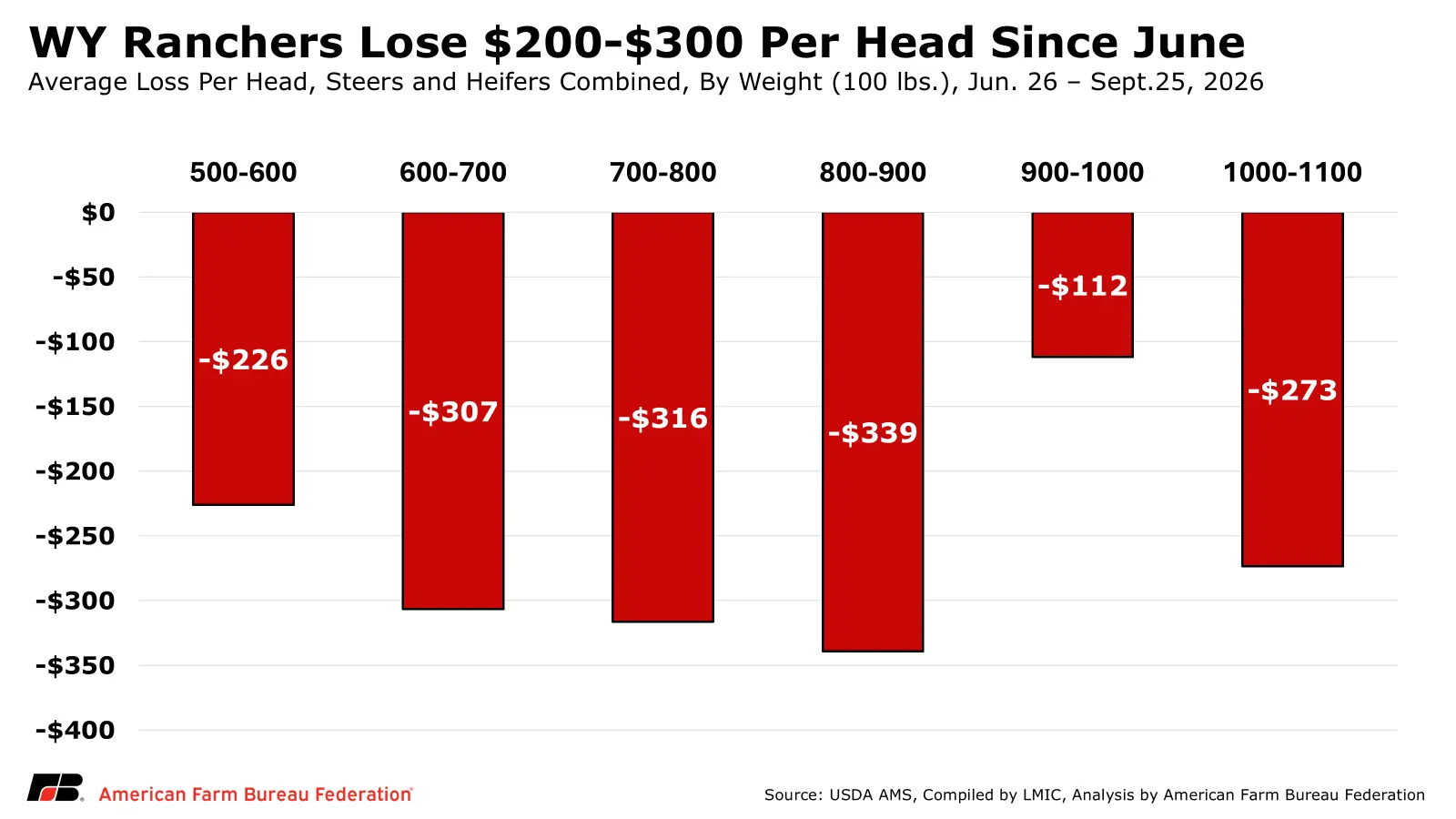
Losses for combined feeder cattle (steers and heifers) sold at auction in Wyoming during September averaged about $262.22 per head or 9% lower than June. Losses ranged from as low as $111.90 per head for cattle weighing 900-1000 pounds to as high as $339.12 per head for cattle weighing 800-900 pounds. While those losses are less severe than the national averages, Wyoming cattle producers were not immune to losses, accounting for 9-10% of the overall value of cattle in September. Prices improved modestly in October, but combined losses still averaged about $201 per head.
Beef Imports Have Not Provided Price Relief
To determine whether additional beef imports translated into lower retail prices, American Farm Bureau Federation tracked daily prices of 80% lean ground beef at 41 grocery stores in 22 states starting Sept. 2, the day after the proclamation went into effect. The survey included a variety of chain grocery stores and independent grocers across America in both urban and rural markets.
Across our sample, the average price of ground beef barely moved, going from $7.29 a pound on Sept. 2 to $7.16 a pound on Oct. 19 – a reduction of 13 cents or 1.8%. The chart below tracks the lowest, highest, and average price across all stores each day. The average line stayed nearly flat for three weeks, never rising above $7.38 or falling below $7.13, even as lower-tariff beef entered the country. Prices ranged from $3.99 to $11.99 per pound with the typical store charging $7.16 per pound. 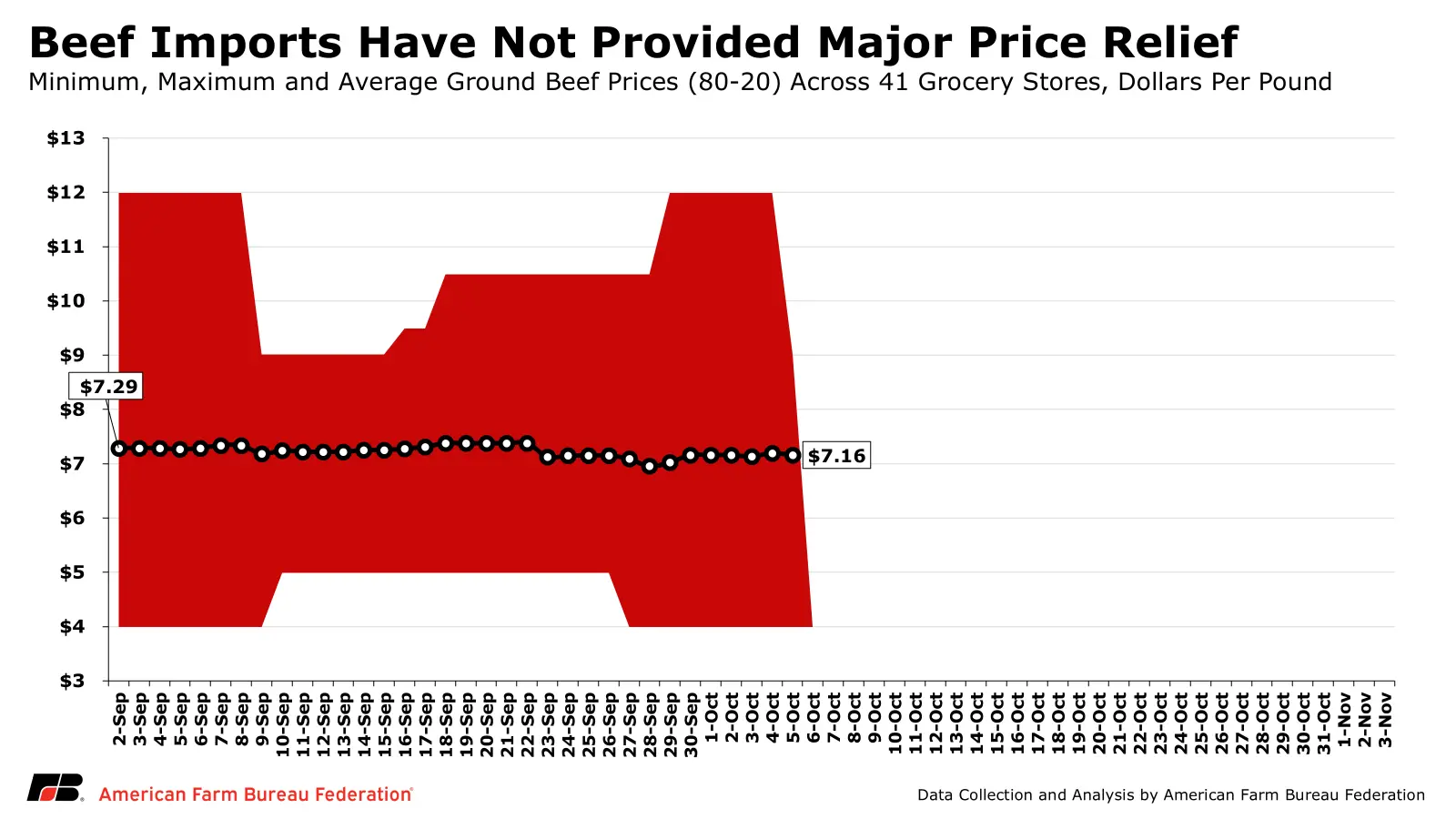
The data suggests that increased beef imports have not delivered meaningful savings to consumers. While cattle producers in Wyoming and across the nation have experienced significant price declines, retail ground beef prices remained largely unchanged, highlighting that lower import costs do not necessarily translate into lower prices at the grocery store.
Markets
USDA’s October Cattle on Feed report provided positive news for cattle markets. Placements into feedlots were down 12% from a year ago and were record low for the month of September signaling fewer cattle available for beef production in the months ahead. Futures markets responded with all contracts for both feeder and live cattle closing positively for the day.
As herd rebuilding begins, additional cattle will be retained for breeding rather than entering the beef supply chain, further tightening supplies. When combined with lower feedlot placements, those fundamentals are supportive of cattle prices in the months ahead.
Markets
USDA’s October Cattle on Feed report provided positive news for cattle markets. Placements into feedlots were down 12% from a year ago and were record low for the month of September signaling fewer cattle available for beef production in the months ahead. Futures markets respond with all contracts for both feeder and live cattle closing positively for the day.
As herd rebuilding begins, additional cattle will be retained for breeding rather than entering the beef supply chain, further tightening supplies. When combined with lower feedlot placements, those fundamentals are supportive of cattle prices in the months ahead.